
Castle Busters Wheels and Utilities
Castle Busters wheels control how your castle moves, with Hover leading the 10 sets at a Speed factor of 1.3. Utilities, also called Helper items, add attacks, barriers, recovery and interception. Choose wheels for the position you need and a utility for the threat you need to answer.
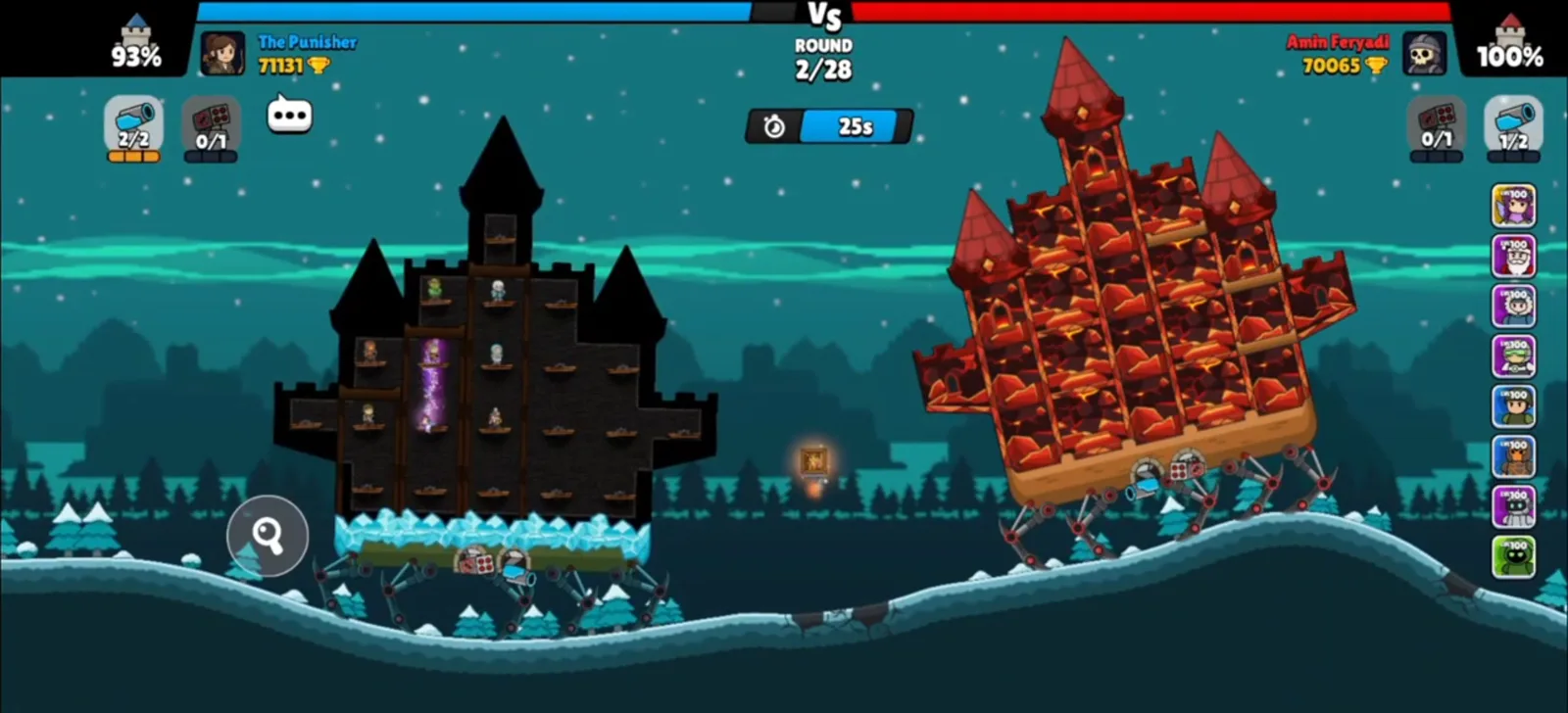
Best Wheels for Moving
Hover is the first choice when comparing the highest Speed factor. Titan leads Power, while Arachnid leads Fuel. Those are different priorities, so the highest value in one column does not make a wheel superior in every situation. Start with the movement problem: a useful angle is out of reach, repositioning takes too long, or the current set runs short during movement.
Woody is the starting set. Progressing the Forge adds alternatives with different tradeoffs. Wheely improves the Speed and Fuel factors over Woody, while Spiky raises Power with a lower Fuel factor. Cyber combines high Speed and Power later in progression. Choose an available improvement you can afford, rather than waiting for a distant unlock while leaving a clear movement weakness unchanged.
| Wheel set | Speed factor | Power factor | Fuel factor | Forge unlock level |
|---|---|---|---|---|
| Woody | 0.8 | 0.6 | 0.6 | Starting wheels |
| Spiky | 0.8 | 0.9 | 0.5 | 4 |
| Tank | 1.0 | 0.9 | 0.6 | 35 |
| Wheely | 1.2 | 0.7 | 0.8 | 40 |
| Titan | 0.7 | 1.3 | 0.7 | 50 |
| Glider | 0.9 | 0.8 | 1.0 | 65 |
| Hover | 1.3 | 0.9 | 0.9 | 70 |
| Spider | 0.6 | 1.1 | 1.1 | 100 |
| Cyber | 1.2 | 1.2 | 1.0 | 160 |
| Arachnid | 1.0 | 1.1 | 1.2 | 180 |
Wheel Power and Fuel
Speed, Power and Fuel are relative factors, with 1.0 as the ordinary reference value. They are not measurements in distance, seconds or damage. Speed compares pace; Fuel belongs to the movement budget; Power is a separate wheel attribute. A large Power number should not be added to a hero's attack, explosion size or Health.
Use those columns to shortlist equipment, then compare the movement you actually need. An upgrade helps wheels move farther, which matters when a useful bonus lies beyond your current reach. The terrain and the angle of the shot still matter. Moving farther is only valuable if the new position creates an attack or avoids a threat that the old position could not handle.
When testing, hold your squad and castle layout steady. Note the angle or destination that failed, equip the alternative wheels, and repeat a comparable movement. If the problem persists, examine terrain or starting position before buying another set. The movement basics provide context for aiming after a move, and the castle layout guide helps separate a position problem from a structural weakness.
Budget Your First Upgrade
The prices below are each wheel's first upgrade payment in Wood and Coins. They are not a total price for every level, and the Forge requirement in the previous table is an unlock condition. Keeping those separate avoids budgeting a complete equipment project from a single introductory cost.
| Wheel | First upgrade Wood | First upgrade Coins |
|---|---|---|
| Woody | 5 | 15 |
| Spiky | 15 | 45 |
| Tank | 200 | 600 |
| Wheely | 300 | 900 |
| Titan | 450 | 1,200 |
| Glider | 600 | 1,800 |
| Hover | 600 | 1,800 |
| Spider | 1,000 | 3,000 |
| Cyber | 1,500 | 4,500 |
| Arachnid | 1,500 | 4,500 |
Woody's first step costs 5 Wood and 15 Coins. Hover's costs 600 Wood and 1,800 Coins. Compare that payment with the next useful castle or squad upgrade. If your attackers already reach their angle but die before firing again, a movement purchase may not address the actual bottleneck.
Offensive Utilities by Job
Attacking Utilities apply pressure independently of the units in your formation. Cannon supplies direct support fire, Para-Bomber approaches from above, and Cloud Maker punishes an exposed enemy. Goo Shooter prepares a surface for an explosion when it is hit, while Laser applies a continuous beam. Ice Cannon has a different offensive purpose: it slows the enemy castle's wheels.
| Attack utility | Effect | Cooldown turns | Attribute | Forge level | Wood | Coins |
|---|---|---|---|---|---|---|
| Cannon | Adds cannon fire alongside unit attacks. | 1 | Damage | 8 | 30 | 90 |
| Para-Bomber | Drops a parachuting bomb onto the opposing structure. | 1 | Damage | 25 | 60 | 150 |
| Cloud Maker | Places a damaging storm over an exposed opponent. | 1 | Damage | 32 | 200 | 600 |
| Ice Cannon | Slows the opposing castle by hitting its wheels with frost. | 3 | Durability | 60 | 400 | 1,200 |
| Goo Shooter | Leaves goo that produces an explosion when struck. | 2 | Goo Spread | 170 | 1,500 | 4,500 |
| Laser | Maintains a beam against the opposing castle. | 2 | Damage | 200 | 1,800 | 5,000 |
The attribute column explains what each item displays, and the cooldown gives its rhythm in turns. A low cooldown is useful only if the effect has a target. Cloud Maker needs an exposed unit; slowing wheels matters when movement is helping the opponent. Pick the effect before comparing its timing, rather than selecting the item with the smallest cooldown number.
Cannon unlocks at Forge level 8, earlier than the other listed Helpers. That gives you a straightforward way to learn utility timing while the Forge expands your options. Read the upgrade progression reference when planning a later unlock. The Forge Pass comparison distinguishes that progression from the seasonal hero track.
Best Defensive Utility
Anti-Missile, Shield and Portal Maker answer incoming attacks in different ways. Anti-Missile intercepts projectiles, Shield absorbs damage with a barrier, and Portal Maker catches shots and sends them back out. Heal restores unit Health after damage has reached the squad. Adrenalin Shot supports offense by strengthening a random ally temporarily, rather than choosing a guaranteed recipient.
| Defense or support | Purpose | Cooldown turns | Attribute | Forge level | Wood | Coins |
|---|---|---|---|---|---|---|
| Shield | Raises a barrier to absorb damage before it reaches the structure. | 3 | Strength | 16 | 100 | 300 |
| Heal | Recovers Health across your surviving squad. | 1 | Power | 45 | 300 | 900 |
| Adrenalin Shot | Temporarily strengthens a randomly selected ally. | 2 | Boost | 80 | 600 | 1,400 |
| Anti-Missile | Intercepts enemy projectiles as they approach. | 3 | Capacity | 90 | 800 | 2,400 |
| Portal Maker | Catches projectiles in a portal and sends them back out. | 2 | Portal Size | 120 | 1,000 | 2,500 |
A useful utilities tier list starts with the loss you are trying to prevent. Favor an interceptor against troublesome incoming projectiles, a barrier when you need the structure protected, or recovery when damaged survivors still have work to do. Portal Maker offers another projectile response once its Forge requirement is reached. These are conditional choices; each effect earns its value in a different moment.
Look at the squad's needs too. A defensive utility that preserves a decisive attacker can matter more than another source of damage. A team already rich in support may need pressure instead. The deck role checklist helps identify that gap, while the roster comparison helps distinguish a missing unit role from missing equipment.
Playing Around Anti-Missile
Anti-Missile intercepts approaching projectiles and uses Capacity as its displayed attribute. Its cooldown is 3 turns. Watch the defense before choosing your attack, because a shot that would be useful against bare walls may interact differently with an interceptor in front of them. Evaluate which part of your attack actually gets through.
Fairy sends a trail of destructive orbs and provides a way past an Anti-Missile defense. The video focuses on that matchup. It is a useful comparison when ordinary projectiles are being intercepted and you need a different attack pattern.

Do not generalize that matchup into immunity against every defensive item. A barrier and a returning portal have different effects. Likewise, the castle weapon is only part of the opponent's defense; walls and unit placement still shape the outcome. Use the target selection guide to decide what should be removed before you spend the next important attack.
Ice Cannon and Positioning
Ice Cannon targets mobility by sending frost onto enemy wheels. It unlocks at Forge level 60 and has a 3-turn cooldown. Choose it when repositioning is helping the opponent escape your desired angle or reach a useful bonus. Its purpose differs from the direct damage dealt by Cannon or Laser.

Plan a movement change before committing the shot. Look at the enemy wheels, the terrain between the castles, and the position from which your selected unit will fire. A better angle can change which wall or exposed defender is reachable. The visible power-up rings are battlefield bonuses, separate from the persistent Utilities you equip through progression.
- Name the problem: angle, movement range, incoming projectiles or damaged survivors.
- Choose the equipment attribute or effect that addresses it.
- Confirm its Forge requirement and the next visible upgrade cost.
- Try the change with a familiar formation.
- Keep it if the specific failure improves across comparable fights.
If changing Utilities means rethinking the squad, start with the individual unit cards and their attack patterns. For example, Ice Blaster is a hero, while Ice Cannon is equipment. The similar names do not make them substitutes in the same slot or give them identical effects.
Equipment Choice Questions
Are Hoover wheels a separate wheel set?
The wheel set is named Hover, and it leads the Speed comparison at 1.3. It unlocks at Forge level 70. Glider is a different set, with its own balance of Speed, Power and Fuel. Use the exact equipment name when comparing upgrade prices so that a similarly described hovering design does not become the wrong purchase.
Does the highest Power wheel also deal more unit damage?
Titan has the highest listed wheel Power factor, 1.3, but that is not a unit-damage bonus. Wheel attributes describe the movement equipment, while each hero has separate attack statistics. Compare Titan's lower Speed with your positioning needs instead of multiplying a hero's damage by the wheel Power value or treating it as an extra weapon.
Should I always replace Shield with Anti-Missile?
No. Anti-Missile intercepts projectiles and unlocks at Forge level 90; Shield supplies a damage-absorbing barrier from Forge level 16. They cover different defensive situations despite sharing a 3-turn cooldown. Identify whether incoming shots or damage reaching the structure is the recurring problem, and compare the relevant effect rather than ordering every defensive utility on one universal ladder.
How should I read an Anti-Missile upgrade?
Read Anti-Missile's Capacity field alongside its 3-turn cooldown. Capacity is the named attribute for that utility, whereas Shield uses Strength and Portal Maker uses Portal Size. Those labels describe different effects, so a level comparison should stay within the same item. An upgraded interceptor still needs an appropriate matchup and timing to justify its place in your setup.
Is Ice Cannon the same as Ice Blaster?
No. Ice Cannon is a Helper item that slows enemy wheels and unlocks at Forge level 60, with a 3-turn cooldown. Ice Blaster is a unit you select as part of the squad. Keep the two names separate when changing equipment: choosing a utility to control castle movement is a different decision from replacing a hero in your formation.